Black Liberation Flag’s Promise Demands Meaningful Change
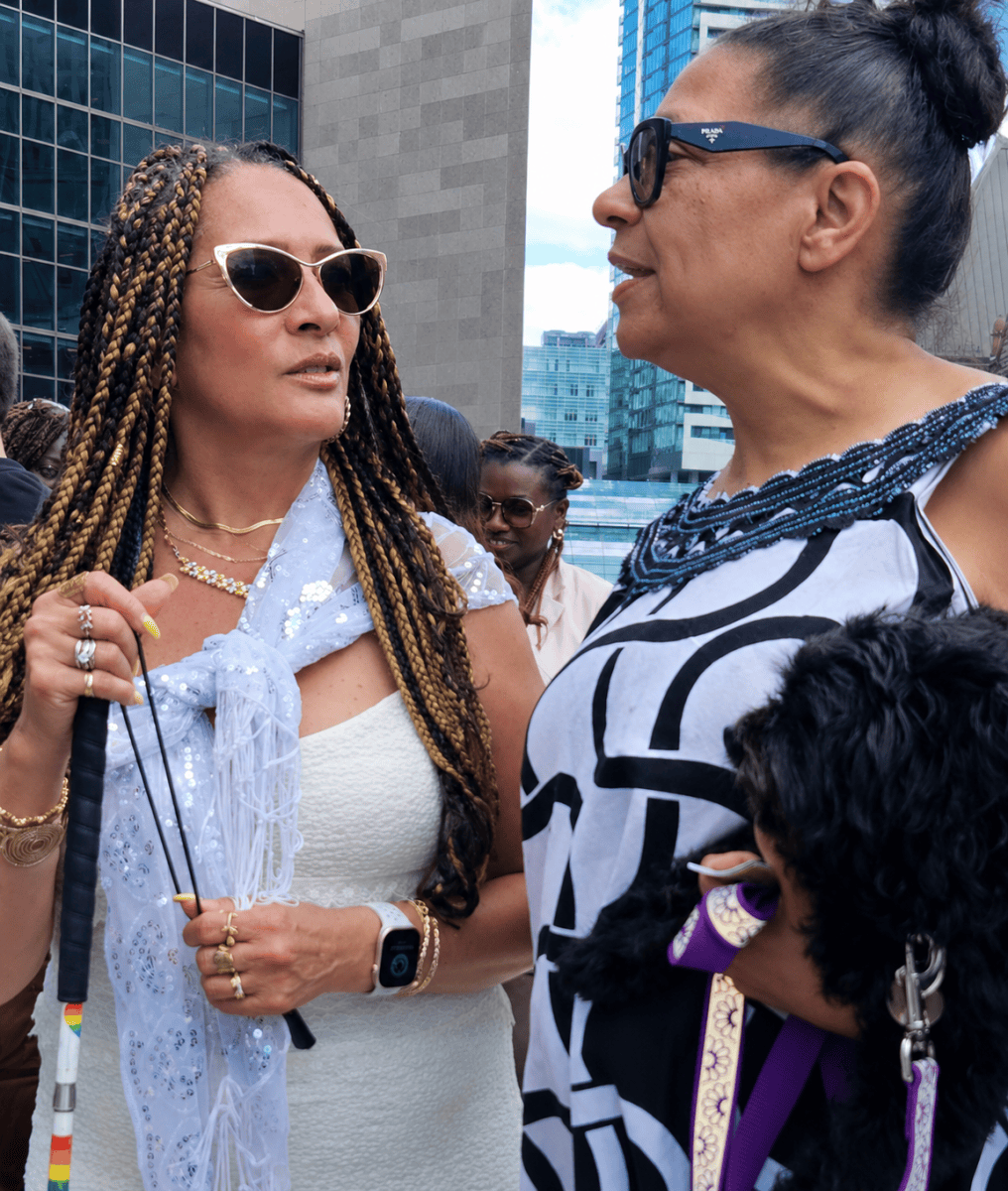
TORONTO — Under a blazing summer sun on the rooftop terrace of Toronto City Hall, members of the Black community gathered for a Black Liberation Flag-raising ceremony marking the beginning of Emancipation Month.
The ceremony commemorated the legacy of Aug. 1, 1834, when the Slavery Abolition Act came into effect across most of the British Empire.
This year’s Emancipation Month theme, “Celebrating Black Disability Justice: Engaging Black Disabled Communities,” brought an often-overlooked experience to the forefront: the barriers faced by Black people with disabilities.
Speakers and disability advocates pointed to persistent gaps in employment, education, research and decision-making — spaces where Black people with disabilities remain significantly underrepresented.
“Black and Indigenous people with disabilities have largely been absent from research, boardrooms where decisions are made, education and training programs,” said TerriLynn Hullet of the National Black Disability Coalition.
“We still don’t have any idea how many Blacks with disabilities are able to access disability-related support,” she said.
The message carried particular weight beneath the Black Liberation Flag flying above City Hall: emancipation may be rooted in history, but the struggle for full participation and equality continues.
Undeterred by the Heat
The afternoon heat bore down on the rooftop terrace, with little escape from the sun. Still, the crowd remained.
There were no complaints.
Attendees listened as speakers addressed the gathering, while performers — Canada’s Got Talent semi-finalist Simone Soman spoken word artist ByAffrica and steel drums artist — brought music, movement and cultural expression to a ceremony centred on remembrance, resilience and liberation.
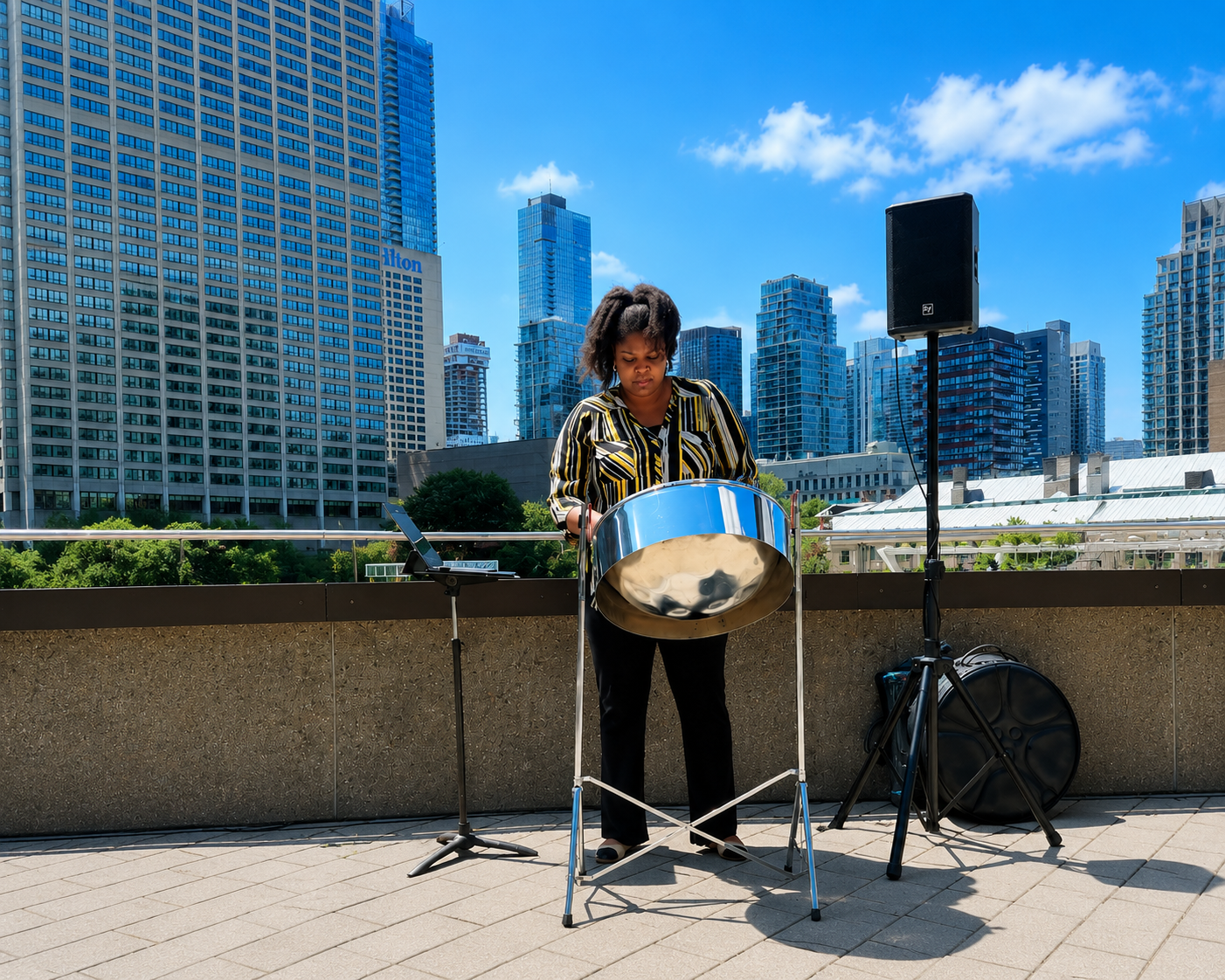
The oppressive heat became an almost fitting backdrop to an event about endurance. People stayed, listened and participated — undeterred.
What Is Emancipation Month?
Emancipation Month honours the enduring struggle for human rights while recognizing the contributions of people of African descent.
Observed throughout August, it confronts a painful chapter in history while also drawing attention to the continuing responsibility to challenge racism, discrimination and other barriers to equality.
For many members of the African diaspora who have made Canada home, the history of transatlantic slavery may be associated primarily with the United States, the Caribbean and other parts of the Americas. But Black Canadian community leaders say Emancipation Month belongs to the broader African diaspora and want to see greater participation from African communities.
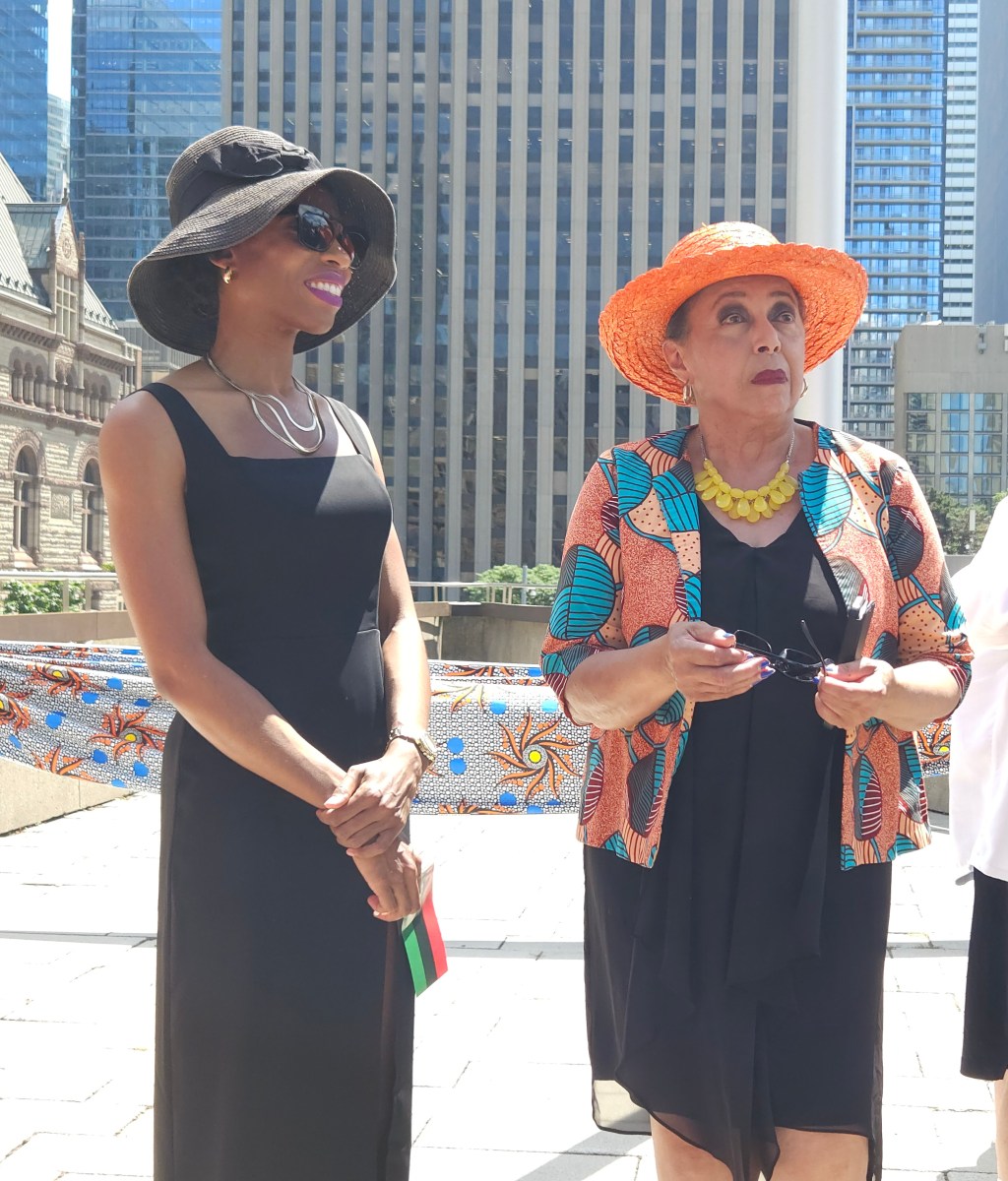
Rosemary Sadlier, a Canadian author, educator and former president of the Ontario Black History Society, played an important role in the decades-long effort to secure formal recognition of Aug. 1 as Emancipation Day.
“It is time for the African community in Canada to embrace Emancipation celebrations, as we are part of the same community,” Sadlier said.
Her message underscored a broader theme of the gathering: emancipation is not simply a historical event belonging to one segment of the Black population. Its legacy connects generations and communities across the African diaspora.
Emancipation, the Pan-African Flag and Marcus Garvey
Flying above the ceremony was a symbol whose history extends beyond Canada.
The red, black and green Pan-African Flag — also widely known as the Black Liberation Flag — was formally adopted in 1920 by the Universal Negro Improvement Association and African Communities League (UNIA-ACL), the organization led by Jamaican-born Pan-Africanist Marcus Garvey.
The flag emerged as a powerful expression of Black identity, unity, liberation and self-determination and became one of the enduring symbols associated with the Pan-African movement.
Garvey understood the political and psychological power of a people having symbols of their own.
In a 1921 speech, he declared: “Show me the race or the nation without a flag, and I will show you a race of people without any pride.”
Amy Jacques Garvey, his wife and an influential journalist, editor and Pan-African activist in her own right, later wrote an ode dedicated to the flag.
More than a century after its adoption, the red, black and green flag continues to rise at gatherings commemorating Black freedom and resistance.
At Toronto City Hall, however, this year’s ceremony carried a contemporary challenge.
If the Black Liberation Flag represents freedom, unity and self-determination, speakers argued that those principles must also reach Black people with disabilities — in workplaces, classrooms, research, community organizations and the rooms where decisions are made.
Before her remarks, Toronto Mayor Olivia Chow presented the proclamation scroll to Liza Arnason, founder of Asē Community Foundation and disability justice activist. Chow said the existing barriers must not simply be adjusted but removed. She vowed to work with Black disability advocates, councillors and community members to create programs, remove barriers and support the empowerment of people with disabilities.
The flag may have risen above City Hall, but the message from the rooftop was grounded firmly below: the promise of liberation requires meaningful change.
Msimulizi is now on the Whattsup Channel. Click here
Msimulizi Community News hutumia zana za akili bandia (AI) kusaidia katika utafiti, ukusanyaji wa taarifa, uundaji wa picha za infografia na vielelezo, pamoja na kuhariri na kuboresha baadhi ya makala. Waandishi wa habari na wahariri wetu wanaendelea kuwajibika kwa maudhui ya mwisho, uthibitishaji wa taarifa na maamuzi ya uhariri.




You must be logged in to post a comment.