
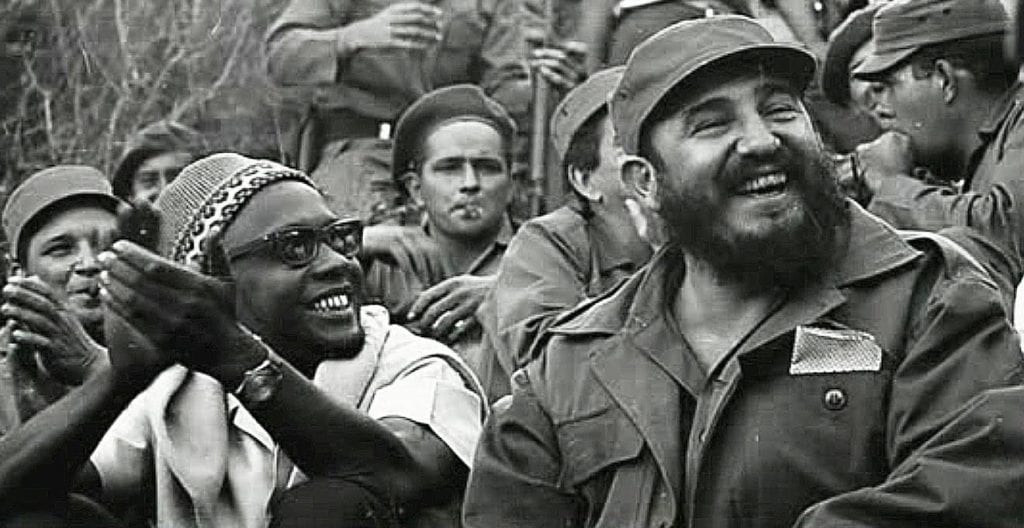
By any honest reading of history, Africa does not stand apart from Cuba’s story. Africa stands within it. At a moment when Cuba faces renewed pressure, sanctions, and threats from Washington under the familiar strongman language of Donald Trump, Africa must ask itself a difficult but necessary question: who stood with us when we stood alone? The answer, written in blood, sacrifice, and solidarity, is unmistakable—Cuba.This is not sentiment. It is history.When Africa Bled, Cuba Answered. In the 1960s and 1970s, as African nations staggered out of colonialism, many found themselves immediately besieged—by proxy wars, apartheid aggression, economic strangulation, and political destabilization. While powerful nations debated Africa’s future in distant capitals, Cuba showed up in person.Cuban doctors, teachers, engineers, and soldiers crossed the Atlantic not for profit, not for territory, and not for influence—but for principle. From Algeria to Guinea-Bissau, from Ethiopia to Angola, Cuba placed its people where its mouth was.The most defining chapter remains Southern Africa. At a time when the apartheid regime of South Africa was armed, emboldened, and backed by Western powers, Cuban forces stood shoulder to shoulder with Angolans and Namibians. The Battle of Cuito Cuanavale was not just a military confrontation; it was a turning point. Nelson Mandela himself later acknowledged that Cuba’s role helped shatter the myth of apartheid’s invincibility and accelerated the liberation of Southern Africa.No African nation paid Cuba for this. No resources were extracted. No flags were planted. Solidarity Without an InvoiceCuba’s contribution to Africa did not end with guns falling silent. In the decades that followed, Cuban doctors filled rural clinics across the continent where no one else would go. Cuban teachers trained African professionals. Cuban scholarships educated generations of African students when options were scarce.All this while Cuba itself endured economic isolation, embargoes, and hardship imposed by the same forces that today once again rattle their sabers. This is the core truth that must not be forgotten: Cuba gave Africa what it needed most at its weakest moments—solidarity without an invoice.
A Nation Under Pressure—AgainToday, Cuba faces renewed hostility. Economic sanctions deepen suffering among ordinary Cubans. Access to medicine, fuel, and financial systems remains restricted. The language of intimidation has returned, dressed in threats and bravado.This is not about endorsing every Cuban policy. It is about recognizing injustice when it appears—especially when it targets a nation that once stood unflinchingly with Africa while others looked away.Where Is Africa’s Voice? The African Union was founded on principles of unity, sovereignty, and resistance to external domination. Those principles are meaningless if they remain silent when a historic ally is bullied.Africa does not need to threaten anyone. But Africa must speak.
Speak in defense of sovereignty.
Speak against collective punishment of civilian populationsSpeak in memory of shared struggleDiplomatic silence in moments like this is not neutrality—it is amnesia.A Debt Beyond DiplomacyThis is not a call for war, nor reckless confrontation. It is a call for moral courage.Africa owes Cuba more than polite statements and forgotten footnotes. It owes Cuba recognition, advocacy, and public solidarity. From Addis Ababa to Pretoria, from Dakar to Dar es Salaam, African voices—governments, intellectuals, civil society, and ordinary citizens—should make it clear: Cuba is not alone.
History is watching. Cuba stood up when Africa was down.
Now Africa must stand up and be counted.Not out of charity.Not out of ideology.But out of honor.
Msimulizi is now on the Whattsup Channel. Click here
Msimulizi Community News uses artificial intelligence (AI) tools to assist with research, information gathering, infographic and illustrative images, and editing/polishing of some articles. Our journalists and editors remain responsible for the final content, verification and editorial decisions.

You must be logged in to post a comment.