

By KHALID MAGRAM
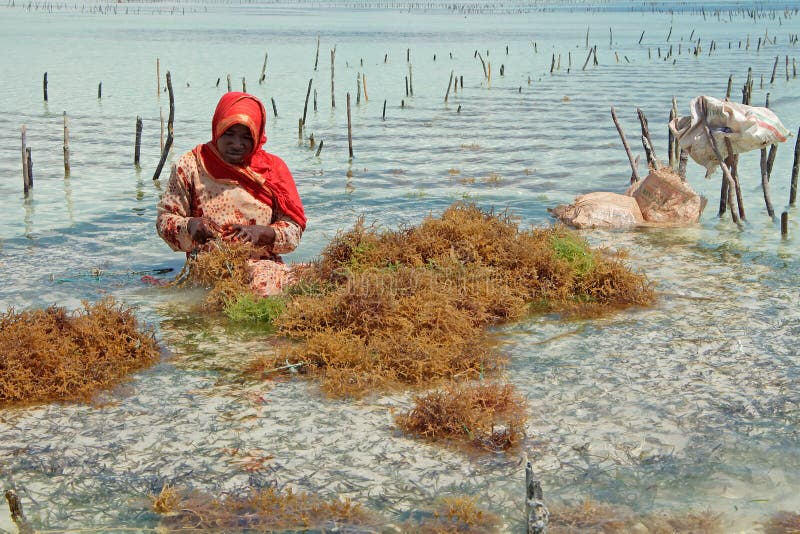
Zanzibar’s turquoise waters and white sand beaches have long defined the archipelago’s global image. But beyond tourism and the legacy of legendary musician Freddie Mercury, a quieter economic transformation is taking place along the coastline — one driven largely by women seaweed farmers and a rapidly expanding global seaweed market.
As international demand for sustainable marine products rises, investors, development partners, and governments are increasingly looking toward seaweed as a strategic blue economy sector with the potential to generate employment, strengthen climate resilience, and expand sustainable manufacturing industries.
According to UN Trade and Development, the global seaweed market grew from $5 billion in 2000 to $17 billion in 2021. While still a small segment of the broader $400 billion global marine resources economy, seaweed is emerging as a high-growth industry with applications extending beyond food and aquaculture into biodegradable plastics, textiles, cosmetics, pharmaceuticals, fertilizers, and biofuels.
For Zanzibar, the opportunity is especially significant because women already form the backbone of the industry.
According to findings from the 2021 Zanzibar Government Census and aquaculture value chain assessments, women dominate seaweed farming largely because cultivation in shallow intertidal coastal zones remains accessible and low-cost. In communities where fewer than half of women participate in formal employment, seaweed farming has become a vital source of household income and economic independence.
In many coastal villages, generations of women have relied on seaweed farming to support families, pay school fees, and sustain local economies. Today, however, these communities face mounting pressures from climate change, including rising ocean temperatures, declining yields, and limited access to financing, technology, infrastructure, and international markets.
Despite these challenges, Zanzibar’s women farmers continue to demonstrate remarkable resilience and entrepreneurial leadership.
Globally, women contribute more than half of seaweed production labour in countries such as Tanzania, Indonesia, and the Philippines. Nearly 40% of seaweed start-ups are now led by women, highlighting the sector’s growing role in advancing both economic development and gender inclusion.
“Seaweed can increase opportunities for income diversification, new business activities and local employment, thus empowering women, youth and indigenous people,” said David Vivas Eugui, Chief of UN Trade and Development’s Ocean and Circular Economy Section.
Yet experts say the sector remains significantly underdeveloped. International trade in seaweed and seaweed-derived products represents only a fraction of the industry’s total value, with exports currently dominated by countries including China, Indonesia, Chile, Ireland, and South Korea.
Development analysts argue that Zanzibar and other East African coastal regions could capture a larger share of this growing market through targeted investment in processing capacity, climate adaptation technologies, research partnerships, marine infrastructure, and women-led enterprises.
UN Trade and Development is urging governments, civil society, academic institutions, and private sector stakeholders to strengthen collaboration around seaweed development strategies. Recommendations include integrating seaweed into national economic plans, expanding financing and training programs for women farmers, supporting innovation in seaweed-based sustainable products, and improving marine governance frameworks that increase women’s participation throughout the value chain.
As global industries search for sustainable alternatives to fossil fuel-based materials, Zanzibar’s coastal communities may now find themselves at the center of one of the fastest-growing sectors in the blue economy — if investment, policy support, and international partnerships arrive in time.
Msimulizi is now on the Whattsup Channel. Click here
Msimulizi Community News uses artificial intelligence (AI) tools to assist with research, information gathering, infographic and illustrative images, and editing/polishing of some articles. Our journalists and editors remain responsible for the final content, verification and editorial decisions.
Discover more from Msimulizi Community News
Subscribe to get the latest posts sent to your email.

You must be logged in to post a comment.