
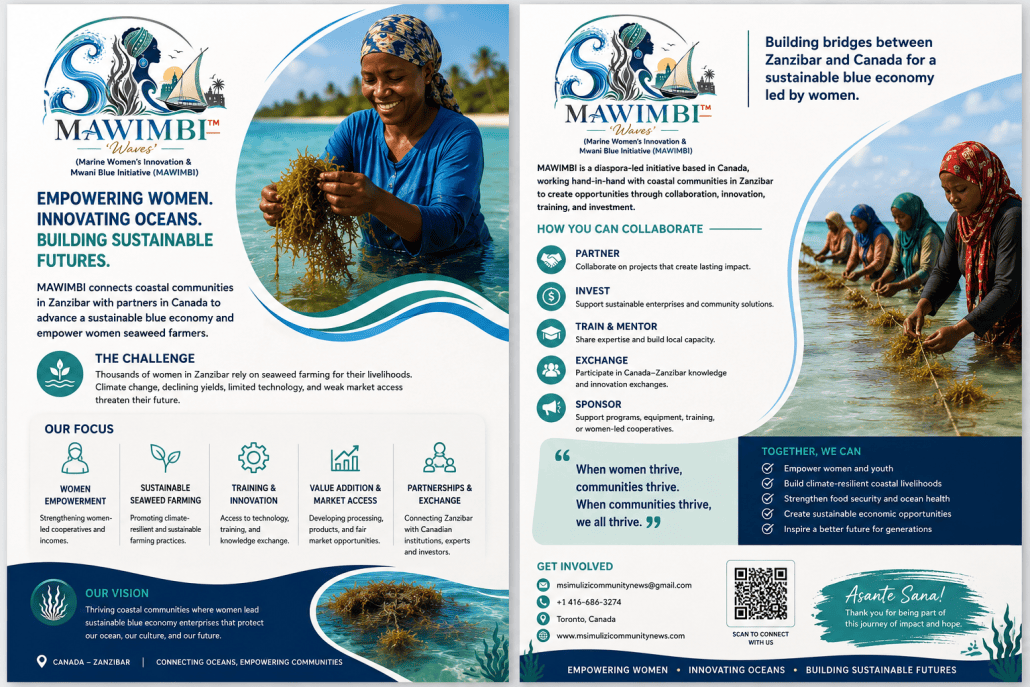
ZANZIBAR — Seaweed production in Zanzibar, one of the archipelago’s most important export industries and a critical source of income for thousands of coastal women, has struggled to regain its former strength after a decade marked by climate-related challenges, disease outbreaks, and changing ocean conditions.
According to industry estimates compiled from government investment reports, FAO assessments, academic studies, and sector reviews, annual seaweed production declined from approximately 11,000 metric tonnes in 2015 to about 10,500 metric tonnes in 2024. While the industry has stabilized at around 10,000 metric tonnes annually in recent years, production remains below earlier peak levels.
What is happening?
Zanzibar’s seaweed industry has experienced a prolonged period of decline and stagnation. Production fell steadily from around 11,000 metric tonnes in 2015 to 9,700 metric tonnes in 2020 before showing signs of recovery. Output rebounded to approximately 10,900 metric tonnes in 2023 before slipping again to an estimated 10,500 metric tonnes in 2024 due to climate variability.
The sector remains a major contributor to Zanzibar’s export economy despite these fluctuations.
Who is affected?
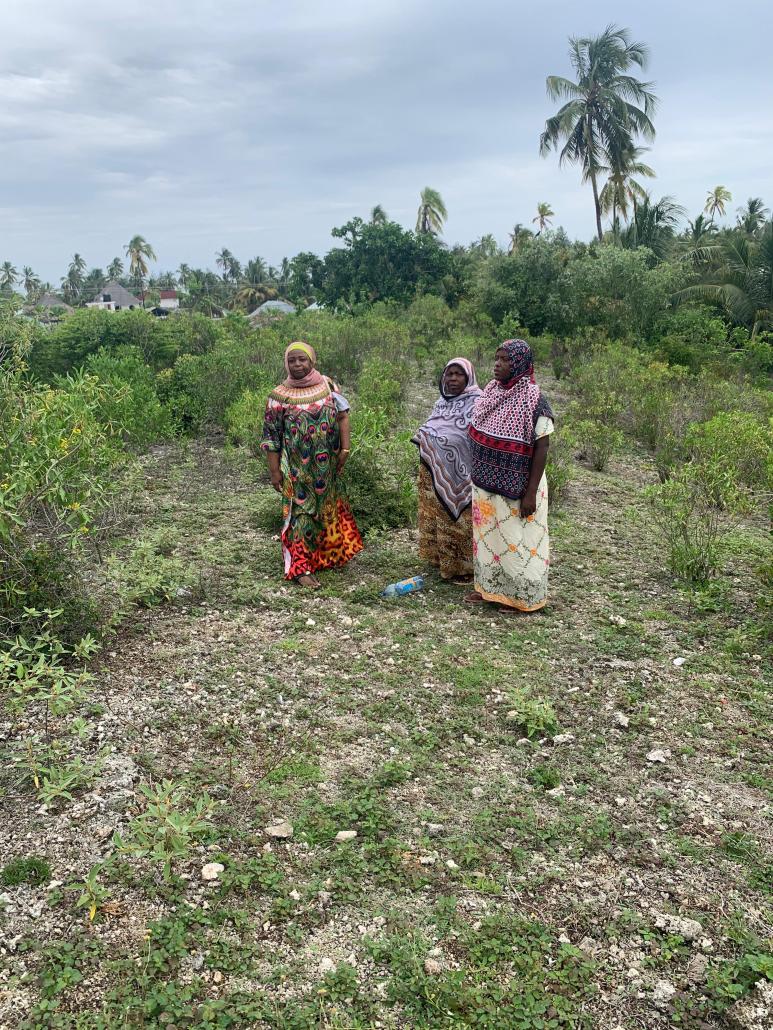
An estimated 20,000 to 25,000 seaweed farmers depend on the industry for their livelihoods, the vast majority of them women living in coastal communities across Zanzibar. For many households, seaweed farming provides income for food, education, healthcare, and other basic needs.
The industry also supports traders, exporters, processors, and businesses connected to global supply chains serving the cosmetics, food processing, pharmaceutical, and carrageenan manufacturing sectors.
Where is the challenge occurring?
The challenge is concentrated in Zanzibar’s coastal waters, where seaweed farming has been practiced commercially since 1989. The islands are internationally recognized for cultivating two primary species: Eucheuma spinosum and Kappaphycus alvarezii (Cottonii).
However, the shallow coastal areas traditionally used for farming have become increasingly vulnerable to warming sea temperatures and environmental stress.
“We are working with the MAWIMBI Project to identify practical solutions that will help women seaweed farmers access deep-water farming technology and reach international markets,” said Arafat Mustafa, president of the Zanzibar Canadian Diaspora Association (ZACADIA).
When did the decline begin?
The downward trend became more pronounced over the past decade. Industry data indicate that production was already declining in 2015 following disease outbreaks. Between 2015 and 2020, annual output dropped by roughly 12 percent, reaching its lowest point during a period marked by climate stress and unfavorable growing conditions.
Although production improved between 2021 and 2023, the gains have not been sufficient to restore the industry to its earlier levels.
Why is production declining?
Experts point to a combination of factors.
Rising sea temperatures linked to climate change have created less favorable conditions for seaweed cultivation. Farmers have also struggled with “ice-ice” disease, a bacterial condition that weakens seaweed and reduces yields. Changes in ocean conditions, including shifts in water quality and temperature patterns, have further affected productivity.
Higher-value Cottonii varieties have been particularly vulnerable, leading many farmers to rely increasingly on lower-value species.
Climate change is now widely regarded as the industry’s single greatest challenge.
How can Zanzibar reverse the trend?
Industry observers argue that recovery will require more than simply increasing cultivation areas. Long-term resilience will depend on innovation, farmer support, value addition, and climate adaptation strategies.
This is where initiatives such as MAWIMBI, a Canada-based diaspora-led blue economy initiative focused on Zanzibar’s coastal communities, could play an important role.
MAWIMBI aims to strengthen sustainable partnerships between Canadian institutions and Zanzibar’s seaweed-farming communities. By focusing on women farmers, the initiative seeks to support climate-resilient livelihoods while improving economic opportunities across the value chain.
Potential interventions could include:
Introducing climate-resilient seaweed farming techniques.
Supporting research into heat-tolerant seaweed varieties.
Expanding farmer training and technical assistance.
Improving access to international markets and fair-value supply chains.
Encouraging local processing and value addition to increase earnings.
Facilitating partnerships with universities, investors, and blue economy experts.
Supporting women’s economic empowerment through entrepreneurship and cooperative development.
Rather than exporting mostly raw seaweed, Zanzibar could potentially capture greater value by producing seaweed-based products for cosmetics, food ingredients, nutraceuticals, and other high-growth sectors.
Looking Ahead
The statistics tell a story of resilience as much as decline. Despite climate pressures and disease outbreaks, Zanzibar’s seaweed industry continues to support tens of thousands of livelihoods and remains one of the islands’ most important export sectors.
For the thousands of women who enter the Indian Ocean each day to cultivate seaweed, the challenge is not simply restoring production figures but building an industry capable of thriving in a changing climate. Projects such as MAWIMBI may offer a pathway toward that future by connecting local knowledge, international partnerships, and sustainable blue economy investment.
As Zanzibar searches for ways to strengthen its coastal economy, the recovery of the seaweed sector could become a powerful example of how climate adaptation and community-led development can work hand in hand.
Mustafa said improving access to modern cultivation techniques and expanding market opportunities are essential if Zanzibar is to reverse declining production trends and strengthen the resilience of coastal communities facing the impacts of climate change.
Msimulizi is now on the Whattsup Channel. Click here
Msimulizi Community News uses artificial intelligence (AI) tools to assist with research, information gathering, infographic and illustrative images, and editing/polishing of some articles. Our journalists and editors remain responsible for the final content, verification and editorial decisions.




In my view, more scientific research needs to be done to discover resilient traits for the long term. Natural selection process always works but this can take time.
Better equipment and vertical farming in deeper waters are also needed where temperatures moderate noticeably and production increases substantially.
And finally, ending the economic disruption in the middle east that has affected so many lives and flow of capital and consumer goods and global commodity prices will also be welcome.